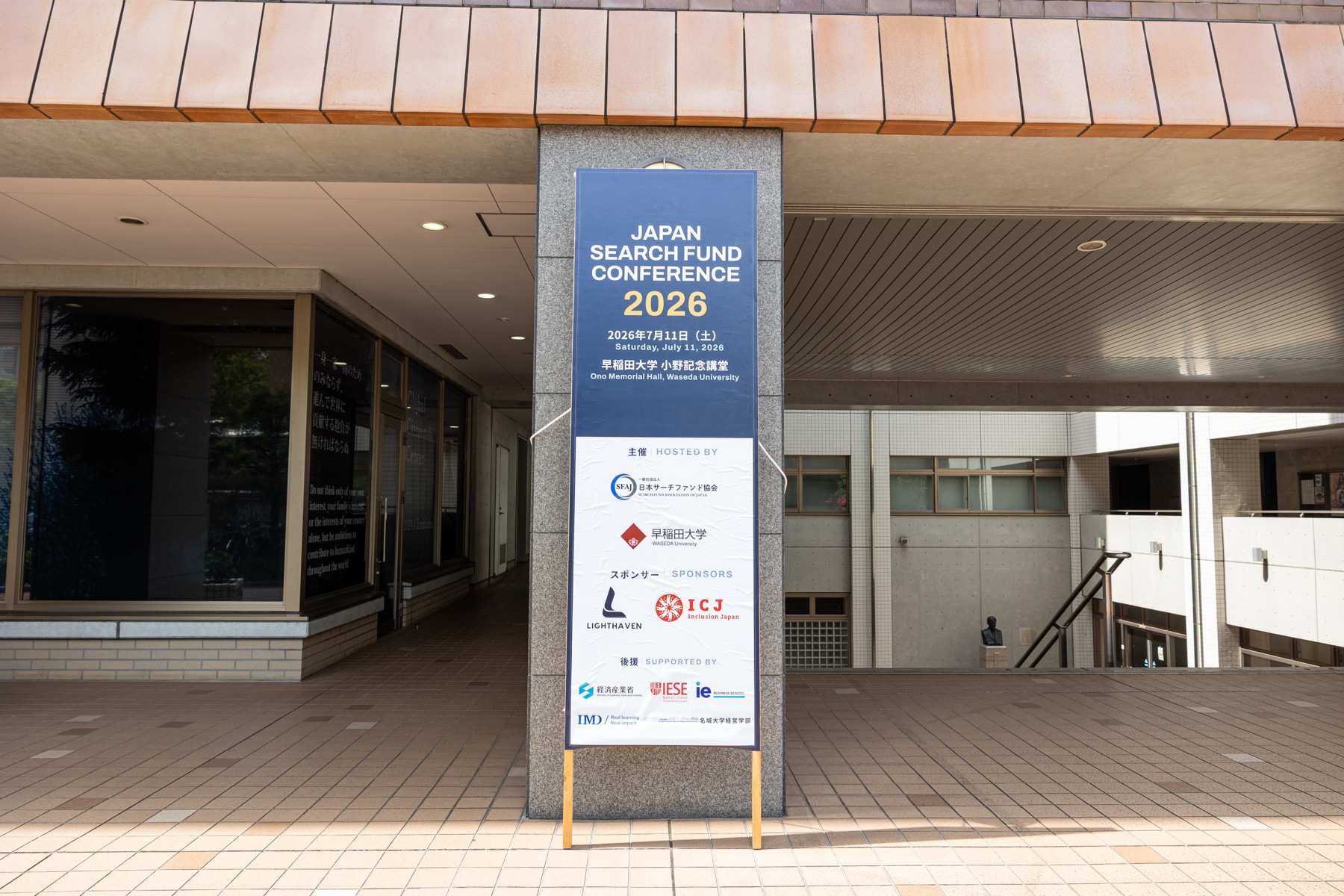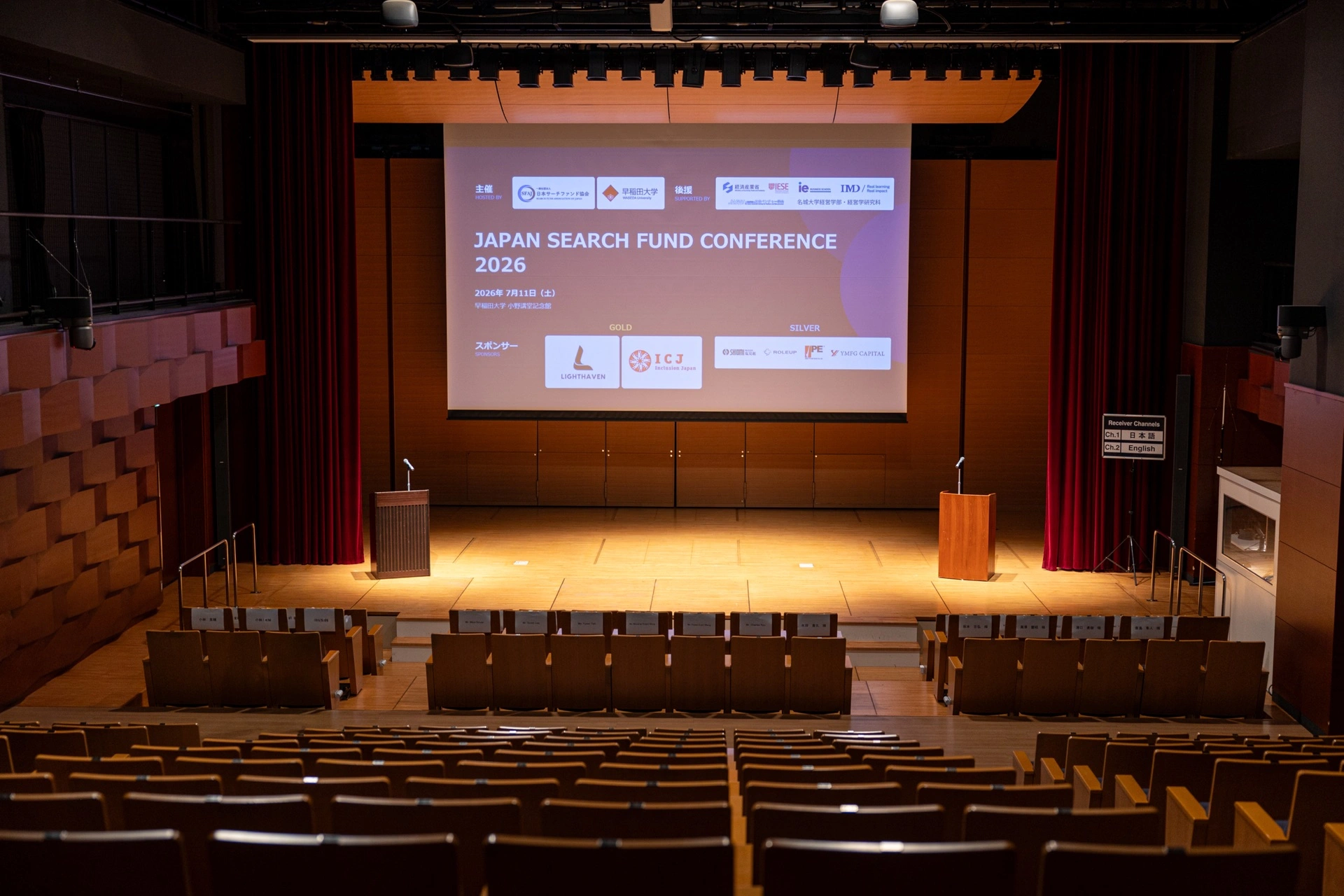
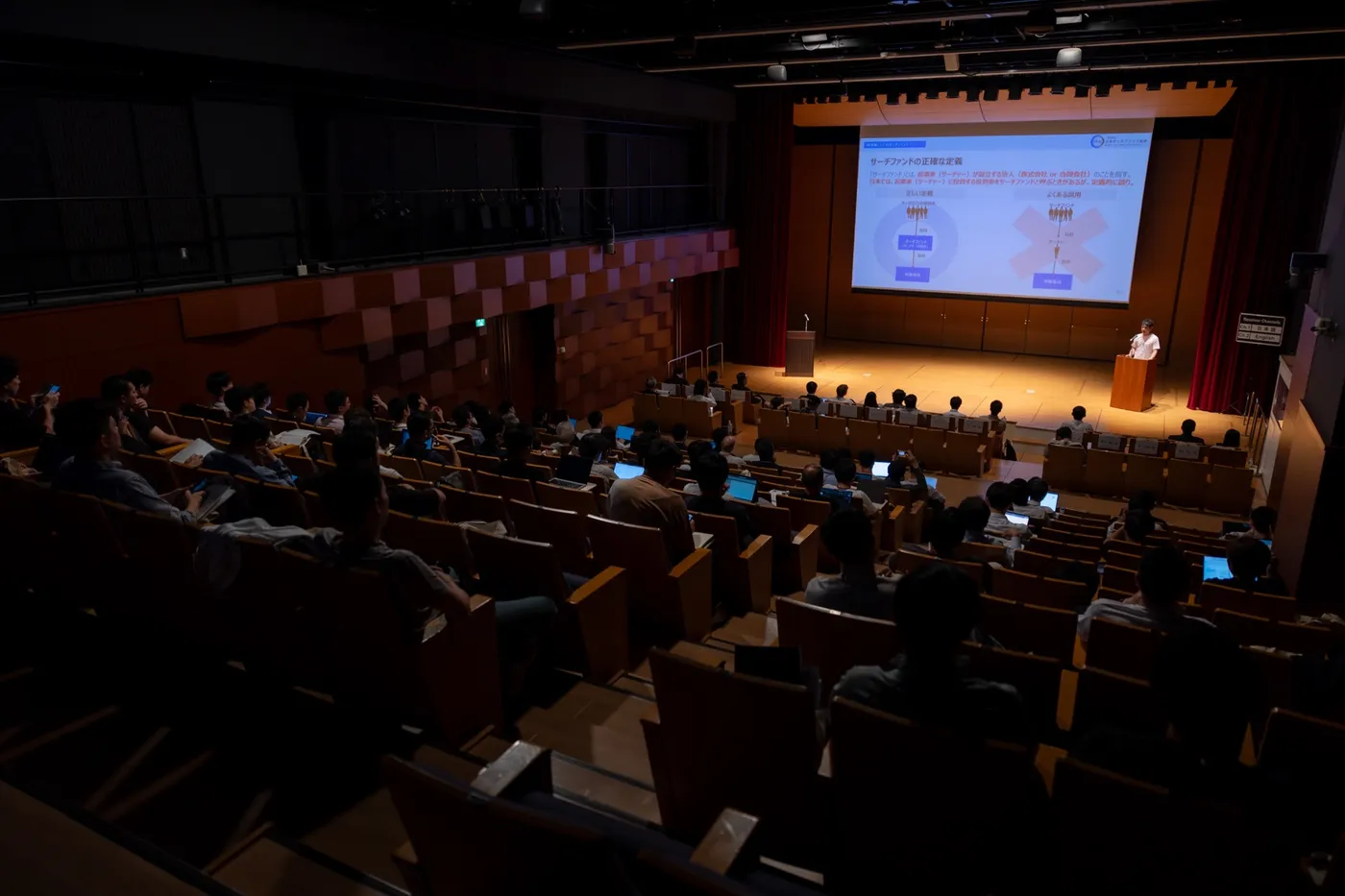
On 11 July 2026, around 200 investors, searchers, operators and advisers gathered at Waseda University’s Ono Memorial Auditorium for the first Japan Search Fund Conference. The Search Fund Association of Japan and the Waseda Search Fund Research Consortium co-hosted the event. Search Panda™ founder Yiqiao Wang joined the programme as a speaker.
A search fund enables an entrepreneur to acquire an established business, become its principal owner-operator and build its value over the long term. The conference opened with the launch of the 2026 Japan Search Fund Study, the first dedicated survey to map this market in Japan. The presentation reported 55 searchers across the country; the survey itself received responses from 33 searchers and nine investors.
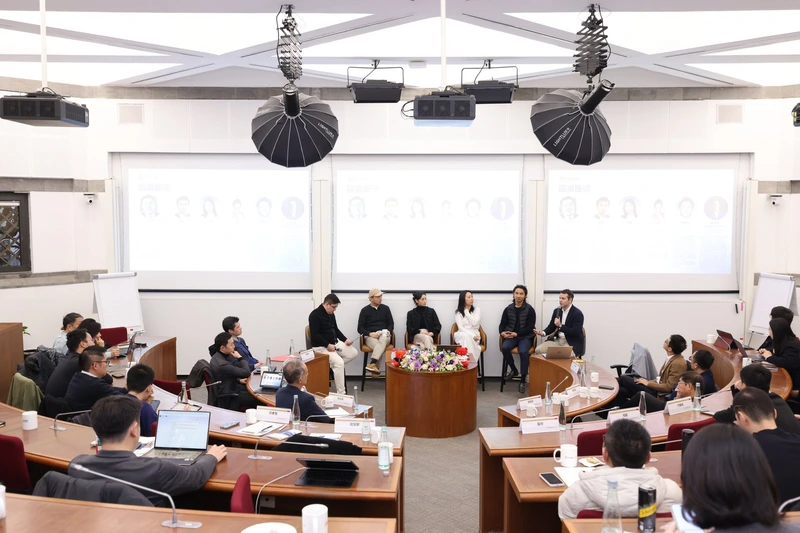
A keynote and five panel discussions showed a market with meaningful activity but no completed investment cycle. Three practical constraints dominated the day: finding businesses that genuinely need a successor, earning owners’ trust in a broker-led market and preserving relationships with employees, customers and suppliers after the handover.
A succession market, not simply an M&A market
In its 2025 survey of business closures and dissolutions, Teikoku Databank recorded 67,949 cases across Japan. Nearly half—49.1%—had still been profitable immediately before closing. Weak economics therefore explain only part of the problem. Ageing owners, a shortage of successors and uncertainty over who will carry the business forward can determine whether a viable company survives.
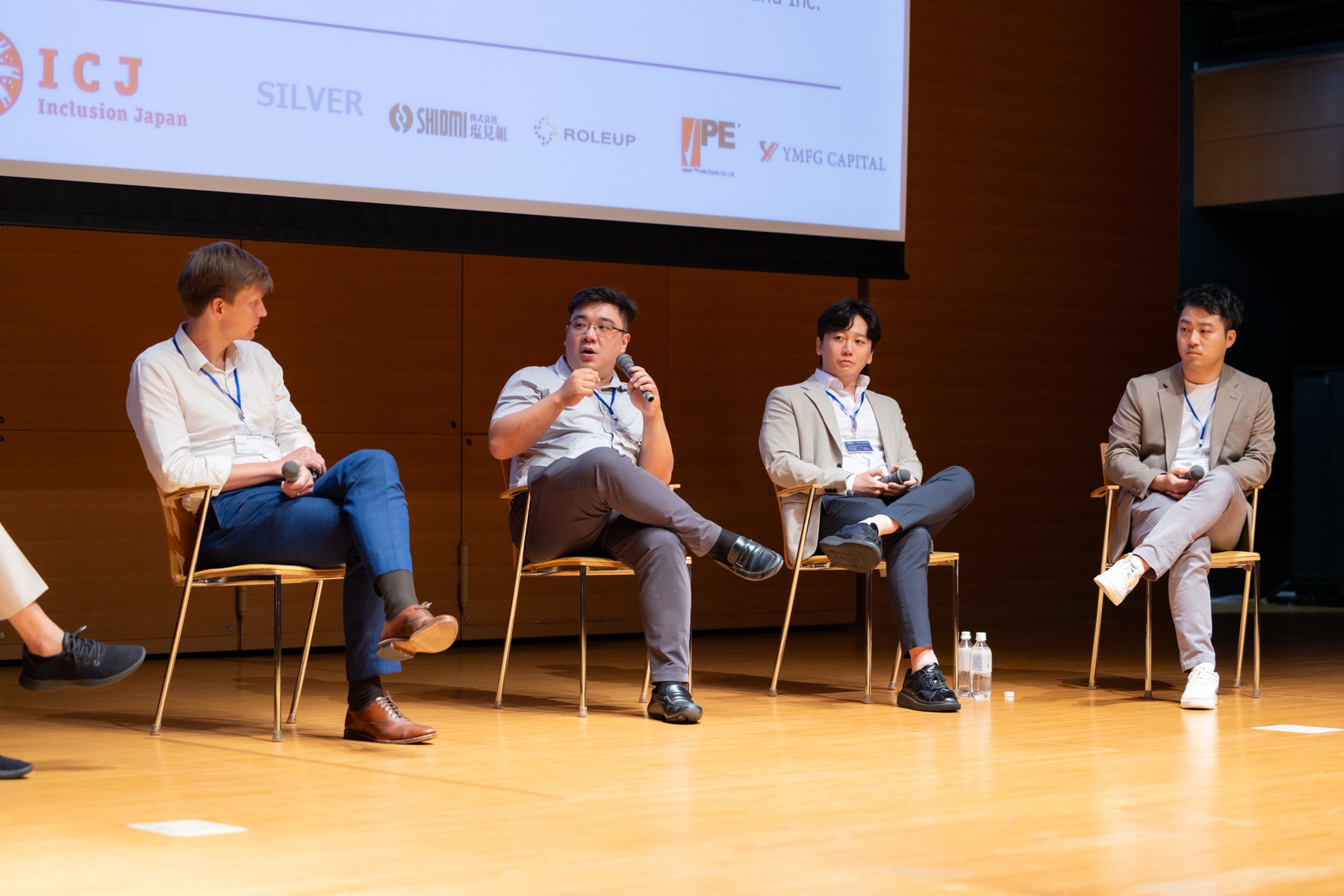
Tycen Bundgaard, a search fund investor from Singapore, described that succession gap as a central part of Japan’s appeal. He also cautioned searchers against relying too heavily on M&A brokers: in one case, the same target was presented to him again by a different searcher six months later.
Korean search fund investor Charles Ryu focused on the other side of the succession problem. Experienced middle managers who leave large companies sometimes move into unrelated small businesses, leaving years of professional expertise unused. Acquisition entrepreneurship can give some of those operators another route to business ownership.
For an owner considering a sale, price is rarely the only question. Who will run the company, whether the team will remain stable and how the buyer will protect the company’s legacy can matter just as much. Searchers need to understand those concerns alongside the financial statements.
The first systematic picture of Japan’s search fund market
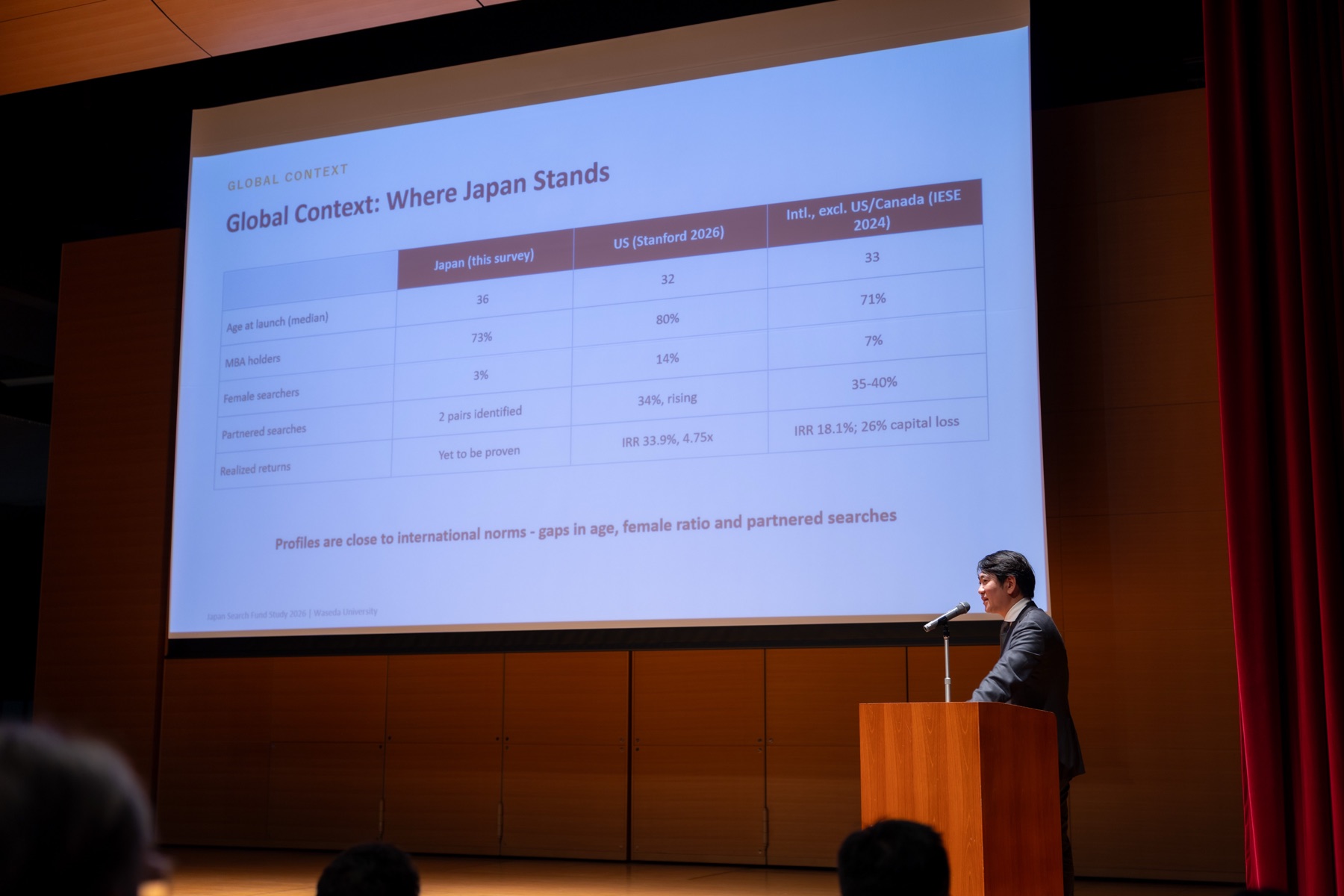
Drawing on responses from 33 searchers and nine investors, the 2026 Japan Search Fund Study adapted the survey frameworks used by Stanford in 2026 and IESE in 2024. Its results show where activity is taking place, how searchers find opportunities and why Japan has yet to complete a full investment cycle.
Selected Key Findings
04
01
36
median searcher ageSearcher profile
The median Japanese searcher was 36 years old, compared with 32 in the United States and 33 globally. Character and vision were the leading selection criteria for 89% of investors.
02
47%
of acquisitions outside TokyoTargets and sellers
Although 82% of searchers were based in Tokyo, 47% of acquired companies were outside the capital. Family owners represented 73% of sellers, and two-thirds of those owners were over 55.
03
84%
rely mainly on M&A brokersSourcing and conversion
M&A brokers were the main source of opportunities for 84% of searchers. Traditional searchers reviewed far more companies than accelerator-backed searchers, but both groups signed few letters of intent.
04
2027–32
projected first-exit windowAn early-stage market
Japan has not yet recorded its first search fund exit; the study projects the earliest exits between 2027 and 2032. Seventy per cent of searchers said public awareness remains low.
The data also reveal a geographic mismatch. Searchers cluster in Tokyo, while almost half of acquired companies are elsewhere. Accelerator platforms can help bridge that gap by combining local broker relationships, financing and the accumulated experience of earlier searchers.
Winning an owner’s attention outside the broker channel
M&A brokers remain the foundation of deal sourcing in Japan. Several searchers nevertheless described how they tried to reach owners directly.
Yosuke Hara created a 20-page personal introduction covering his background, values and character, together with media coverage that helped owners understand who he was. Mitsuya Shimura sometimes added a handwritten note and a small gift. The approach produced a response rate of about 1%.
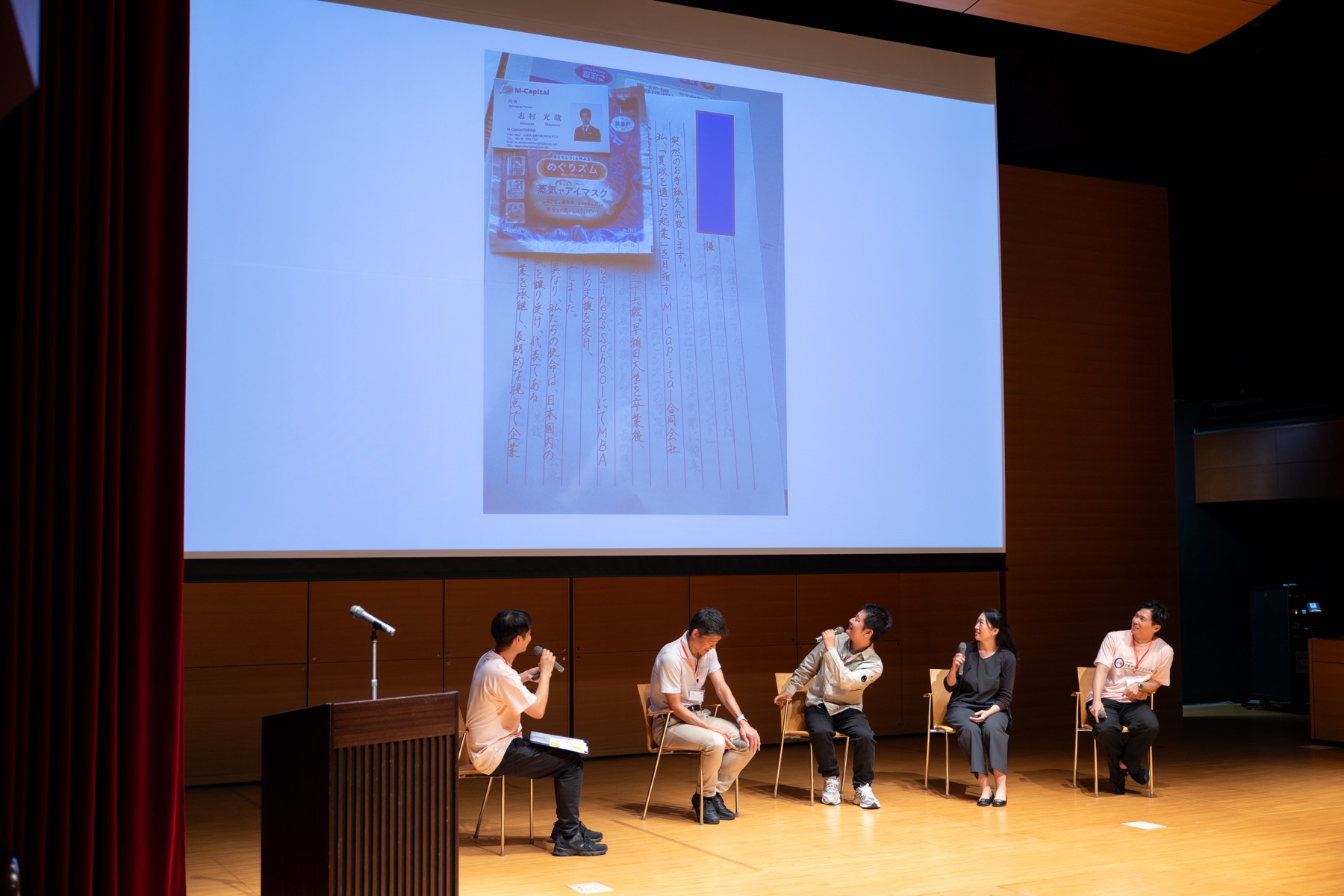
Megumi Takada tested cold emails based on inferred address formats. The method drew mixed reactions: some chief executives objected to the unsolicited contact, while others engaged. She reported a response rate of roughly 0.9% and found that media coverage also prompted owners and prospective sellers to contact her directly. Shu Yagi sourced opportunities through an accountant who worked with an M&A intermediary holding a deal database.
These efforts are supplements to the broker market, not substitutes for trust. Many Japanese owners have never encountered a search fund. Before discussing terms, a searcher must make a credible case for who will lead the business and how its employees and customer relationships will be treated.
The details that surface after closing
The operator panels showed how quickly the work moves beyond the acquisition model and into relationships, systems and day-to-day decisions.
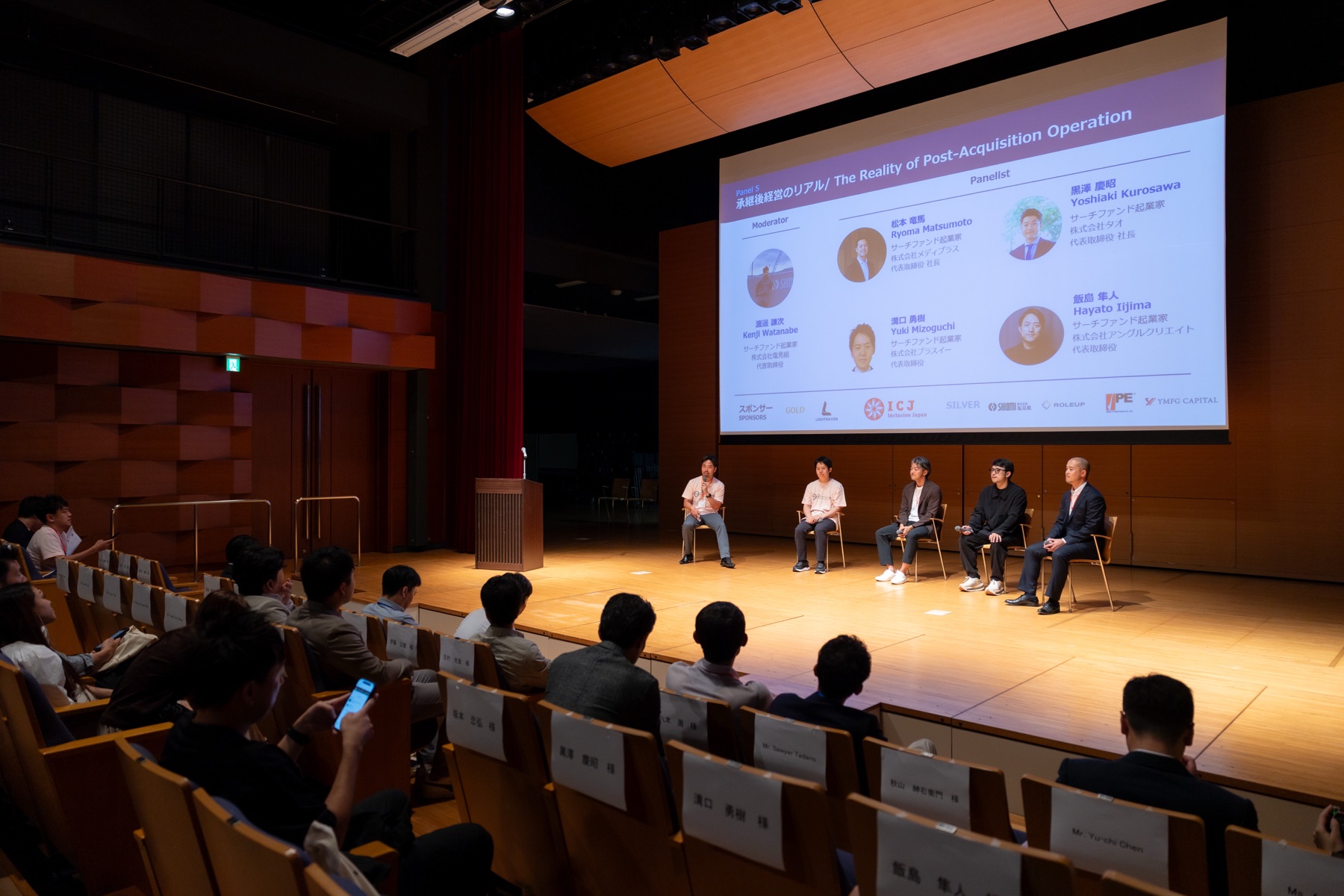
Yuki Mizoguchi described managing a conflict between the former owner’s wife and other partners. He also opened a new location in an area so remote that recruiting employees became difficult. Yoshiaki Kurosawa inherited software that had not been updated for a decade. The issue had been identified before closing, but its operational consequences were badly underestimated.
Ryoma Matsumoto found that there was more he could not change than he could. He kept the company’s operating philosophy, pay structure and working practices in place. At the company acquired by Hayato Iijima, one customer represented 80% of revenue—and that customer’s loyalty rested on its trust in the previous owner.
What comes next
Japan has yet to complete a full search fund cycle. Its first searchers have not exited, and the market has not yet produced a generation of former searchers who can reinvest capital and operating experience in those who follow.
The study expects the first exits between 2027 and 2032. Those outcomes will matter, but the more immediate test is whether new owner-operators can preserve the employee, customer and supplier relationships on which these businesses depend.